Mental Health in the Workplace
Mental Health of Employees
One of our core values at Thrive is that mental health and wellbeing to the top of the agenda. This should start with a risk assessment to identify where in the business there is room for improvements, with the business then putting in place a bespoke strategy to meet the needs of its workforce.
Contact Us
Supporting Wellbeing in The Workplace
Thrive Law was very proud to be a presented as a case study for the SRA’s Junior Lawyer Division guidance on supporting wellbeing in the workplace. You can read this guidance in full, here.
Our inclusion in this guide proves that we practise what we preach, and that we really are innovative and pioneering in our structure and in our emphasis of putting wellbeing at the heart of everything we do.
The guidance covers best practice for safeguarding and promoting the wellbeing of employees in the workplace. It’s designed for law firms, but it’s helpful to any employer looking to understand and support employee wellbeing. The guidance includes storyboards with practical steps that you can use to approach wellbeing conversations with employees, and focuses on three key themes: support, education and training, and culture.
How to encourage a mentally healthy workplace:
Accessible support and resources
We believe mental health training should be mandatory in the workplace, and that employers should be obliged to conduct a risk assessment into the mental wellbeing of their employees. Having a Mental Health First Aider or Mental Health Champion in your workplace is essential in making sure your employees know who they can go to in a crisis or if they just need some advice. Mental Health First Aiders can spot assess and guide anyone with a developing mental health issue and ensure they receive the relevant help they need. This is all done in confidence and at their own pace unless the situation is urgent and needs to be escalated.
A platform such as Thrive Wellbeing supports your employees in accessing relevant and helpful resources to support their wellbeing.
Open Communication and Meetings
Open communication leads to a happier workplace, but this doesn’t just stop at discussion around workload or daily tasks. Having conversations with your employees and colleagues is essential in making sure that the workplace is always a safe space to discuss mental health and wellness.
Breaking down the stigmas surrounding mental health is key in ensuring that your team feel just as comfortable discussing their mental health issues as they do their physical ones. Having regular meetings to monitor employee progression and wellbeing is key.
The benefits of this are increased motivation, commitment and productivity within your team as well as the ease of knowing they are valued in the workplace and can always have open communications with you.
Flexible Working
If employees feel like they will be more productive with their time on certain projects or deadlines working flexibly, then have that conversation with them. Encourage working from home or days out of the office to change up their routine and avoid over working or burnout. It is understandable that this isn’t an option for all workplaces but making sure that employees know that they can take a break or speak to you about their workload concerns is a great step forward. Everyone works best in different ways and so it’s important to establish how to make your team happy.
Mental Health, Neurodiversity and EDI: Frequently Asked Questions
Mental health affects how people think, feel and function at work. Poor mental health is consistently one of the leading causes of long-term absence in the UK, and the cost to employers, in lost productivity, recruitment and staff turnover, is significant. A 2024 Study found that poor mental health costs UK employers £51 billion per year.
Beyond the numbers, people who are struggling are less likely to perform well, more likely to disengage and, without support, more likely to leave.
The legal obligations of employers are significant too. Under the Equality Act 2010, mental health impairments that have a substantial and long-term impact on day-to-day life legally amount to a disability, which means employers have a legal duty to make reasonable adjustments and avoid discrimination.
Getting the basics right, from your policies to your management culture, makes a real difference both to your people and to your risk exposure.
Start with culture, not just process. Policies matter, but what employees actually experience day to day; whether their manager listens, whether they feel they can raise problems without consequences, whether workload is managed before it reaches a crisis point, often counts for more.
A 2024 Study found that employees who felt their company cared about their mental health were almost twice as likely to report flourishing wellbeing.
Practical steps include flexible working arrangements, regular one-to-ones that go beyond task lists, and giving people access to mental health support through an EAP, coaching or occupational health. You don’t need to wait for a formal diagnosis or a legal trigger to act.
We share some of what we do internally at Thrive in this blog.
There’s no single indicator, and that’s part of what makes this difficult. Changes in behaviour are often the clearest signal: someone who has become withdrawn, is missing deadlines they’d normally meet, seems more irritable than usual, or is taking more unplanned absence. They might simply be acting in a way which you know is different for their usual behaviour, including acting in a more outgoing way. Alternatively, you might notice them disengaging in meetings or avoiding situations they’d previously been comfortable in.
If you notice a shift in someone, you should have a private, genuinely open conversation. Ask how they are rather than moving straight to performance management. People don’t always disclose mental health difficulties directly, often because they’re not sure how it will be received. A manager who asks thoughtfully and listens without judgement is usually the first and most important step.
A Mental Health First Aider (MHFA) is someone trained to spot the signs of mental health difficulties, have an initial supportive conversation, and signpost to professional help. They’re not therapists or counsellors, and it’s important to be clear on that boundary, but they can be an accessible, familiar point of contact for employees who might not want to approach HR or a manager directly.
Whether you need one depends on the size and nature of your organisation. There’s currently no legal requirement to have an MHFA in the same way there is for a physical first aider, but many employers find it a useful part of a broader mental health strategy.
If you do appoint MHFAs, make sure they’re properly supported, that the role doesn’t become a drain or overwhelming, and that it sits within a wider culture that takes mental health seriously rather than delegating it to one person. Make sure your policies are clear on the role of MHFA too.
Flexible working has a well-documented positive impact on mental health. Giving people more control over where and when they work reduces stress, allows them to manage personal responsibilities more effectively, and signals that they’re trusted. For many, the trust point is the most significant: employees who feel trusted tend to be more engaged and more productive.
This is not an argument for flexibility without structure, and a poorly managed arrangement comes with its own risks. However, the starting point for most employers should be openness rather than reluctance.
Since the changes brought in by the Employment Relations (Flexible Working) Act 2023, employees have the right to request flexible working from day one, and employers must genuinely consider those requests. You can read more about the mental health benefits of flexible working in our blog here.
“Neurodiversity” refers to the natural variation in how human brains are wired. Neurodivergence is an umbrella term covering a range of neurological differences, including (but not limited to) ADHD, autism, dyslexia and dyspraxia. Research suggests that around 15 to 20% of the population is neurodivergent.
In a workplace context, neurodiversity matters because many standard working environments, from open-plan offices to rigid performance frameworks, are designed around a narrow set of assumptions about how people think, communicate and process information. Recognising neurodiversity means acknowledging that those assumptions don’t work for everyone and taking practical steps to change them.
Neurodivergent employees often bring specific strengths, pattern recognition, deep focus, creative problem-solving, high attention to detail, that are genuinely valuable and often hard to find through conventional hiring. Employers who have actively changed their recruitment and working practices to be more neuro-inclusive have reported measurable gains in productivity, quality of work and employee engagement.
There’s also a legal aspect; those who identify as neurodivergent can also be covered by the Equality Act 2020 under the disability provisions. This means employers need to understand their obligations around reasonable adjustments and ensuring their practices are not discriminatory. Getting ahead of that, rather than responding reactively, is always the better position. Find out more about our neurodiversity work here.
There’s no single checklist, but neuro-inclusion is about understanding your people and culture, your whole employee lifecycle, having supportive conversations, embracing flexibility and support upfront – it is not a fixed set of policies. It’s about neurodivergent people being able to bring their whole self to work and feeling they belong as well as being supported and feeling understood when they need help.
That said, some consistent principles apply: ask people what they need rather than assuming; review whether your physical environment, communication styles and working practices create unnecessary barriers; and make sure your recruitment process doesn’t filter out neurodivergent candidates before you’ve even met them.
You should also strive for a psychologically safe workplace where employees, including neurodivergent employees, feel included and able to be themselves; a study recently found that 76% of employees chose not to fully disclose their neurodivergence at work. If you have a clearer picture of who you’re employing, you are more able to support them holistically.
Training helps, particularly for managers. At the moment, only 24% of organisations have training in place for managers on how to support neurodivergent team members.
Managers who understand neurodiversity are better placed to have productive conversations with their teams, put the right adjustments in place, and create the kind of psychological safety that makes it easier for people to disclose. Our neurodiversity in the workplace training covers all of this, and we’ve also put together a practical guide on steps employers can take here.
Reasonable adjustments are changes an employer makes to remove or reduce barriers a neurodivergent employee faces at work. Under the Equality Act 2010, there’s a legal duty to make them where an impairment qualifies as a disability. The critical point is that they’re meant to be tailored, not generic: what works well for one person may not work for another, even with the same neurodivergent condition.
Common adjustments include flexible working hours, quiet workspaces or noise-cancelling headphones, clear written instructions alongside verbal briefings, adjusted deadline management, and regular check-ins for help with prioritisation. The starting point should always be a genuine conversation with the individual about what would actually help them in their specific role. Our blog on reasonable adjustments goes into more detail here.
The most effective teams tend to include people who think in genuinely different ways. Neurodivergent employees often bring strengths that are hard to teach: the ability to spot patterns others miss, to focus intensely on complex problems, to think laterally, or to retain large volumes of detailed information accurately. These aren’t incidental extras; they’re often exactly what businesses need.
Beyond individual contribution, neurodivergent employees can also be a signal of how inclusive your culture actually is. Organisations that attract and retain neurodivergent talent tend to be the same ones where people feel able to bring their whole selves to work, which usually translates into stronger engagement and lower attrition more broadly.
Equality means that everyone in your organisation has access to fair treatment and genuine opportunity, regardless of who they are.
Diversity refers to the range of people and perspectives in your workforce, and goes beyond the nine protected characteristics under the Equality Act 2010 to include things like social background, regional origin and life experience.
Inclusion is what makes diversity meaningful: it’s the extent to which people feel they belong, can contribute and are genuinely valued.
Diversity is being invited to the party. Inclusion is being asked to dance.
These three things are connected, but they’re not the same. You can have a diverse workforce that isn’t inclusive. You can have inclusive policies on paper that don’t translate into day-to-day experience. Getting all three right takes intent, honesty and ongoing attention.
A workplace that takes EDI seriously tends to attract a wider talent pool, retain people for longer and make better decisions. Teams with a range of perspectives are less likely to develop blind spots and more likely to produce work that reflects a diverse customer base. There’s reasonable evidence behind all of this; a 2023 study found that companies in the top quartile for gender diversity on executive teams were 39% more likely to outperform on profitability.
There’s also a legal and reputational angle. Failing to tackle discrimination or harassment doesn’t just expose you to Employment Tribunal claims (which it, of course, does); it affects how your organisation is perceived externally and how your people feel about working for you. The situations we see ending up in Tribunal tend to be those where discriminatory behaviours were minimised or ignored, rather than addressed and prevented early.
The law is also increasingly moving in a preventative direction, not just a reactive one. Since October 2024, employers have been under a legal duty to take reasonable steps to prevent sexual harassment in the workplace. The Employment Rights Act 2025 goes further still, upgrading that duty to “all reasonable steps” and extending it to cover harassment by third parties. An Employment Tribunal that upholds a sexual harassment claim can apply a 25% uplift to any compensation award where it finds the employer failed to meet the preventative duty. That’s a meaningful financial consequence, on top of the reputational one.
The Equality Act 2010 protects employees and job applicants from discrimination on the basis of nine protected characteristics: age, disability, gender reassignment, marriage and civil partnership, pregnancy and maternity, race, religion or belief, sex, and sexual orientation.
As an employer, your obligations include avoiding direct and indirect discrimination in your recruitment, management, pay and dismissal decisions; making reasonable adjustments for disabled employees; preventing harassment and victimisation; and taking reasonable steps to prevent sexual harassment, a duty that will be strengthened in October 2026 to all reasonable steps. Vicarious liability means you can be held responsible for discrimination or harassment carried out by your employees unless you can show you took all reasonable steps to prevent it. Our discrimination page covers this in more detail.
You can also read more in our blog on the sexual harassment provisions, and if you want a broader overview of what ERA 2025 means for your organisation, our guide to the changes is here. We also deliver sexual harassment prevention training for employers, covering both legal obligations and the practical steps that actually make a difference.
It tends to start at the top. If leadership isn’t visibly committed to inclusion, and doesn’t model what it looks like in practice, cultural change is very hard to achieve. Beyond leadership, practical steps include reviewing your recruitment and progression processes for bias, creating genuine channels for people to raise concerns, and providing training for managers that goes beyond awareness tick-boxes.
Culture also shows up in small interactions. How meetings are run, whose voices are sought out, who gets stretched assignments and who gets overlooked. These everyday moments are what people actually experience as culture, whatever your policies say. If you want honest insight into where your organisation sits, ask your people. Our blog on inclusion and bias goes into more detail on what that looks like in practice.
EDI training, done well, gives leaders and employees the context and practical tools to recognise and address behaviours and understand their role within your organisation’s legal obligations. Training helps people understand their confidence in having difficult conversations, and shifts culture over time when it’s embedded rather than delivered as a one-off event.
Further, it reduces an organisation’s legal risk; vicarious liability means you can be held responsible for discrimination or harassment carried out by your employees unless you can show you took all reasonable steps to prevent it, and training is a part of those reasonable steps.
Having said all that, training alone doesn’t create an inclusive culture. It has to sit within a broader strategy that includes accountability, leadership commitment and follow-through. But it’s usually a necessary part of that picture. Take a look at our training page to see what we offer, or get in touch to talk about what might work for your organisation.
ADHD (Attention Deficit Hyperactivity Disorder) is a neurodevelopmental condition that affects how a person manages attention, impulse control and activity levels. It presents differently in different people: some will find it difficult to sustain focus, manage time or prioritise tasks; others may hyperfocus intensely on things that genuinely interest them. It’s more common than many employers realise, and it isn’t a personality flaw or a lack of effort. NICE estimates that 3 to 4% of UK adults have ADHD.
In the workplace, ADHD can affect things like meeting deadlines, managing competing priorities, sitting through long meetings or keeping on top of administrative tasks. But ADHD also often comes with real strengths: creativity, high energy, original thinking and the ability to hyperfocus on the right problem. Understanding both sides is the starting point for good support. Download our full ADHD guide here.
ADHD can be a disability under the Equality Act 2010 if it is an impairment that has a substantial and long-term adverse effect on a person’s ability to carry out normal day-to-day activities. Whether it meets that threshold depends on the individual and the impact of their specific symptoms. The key point for employers is not to assume either way: don’t treat ADHD as automatically meeting the threshold, but be very open to the possibility.
If ADHD does qualify as a disability, the employer has a legal duty to make reasonable adjustments and must not discriminate against that employee, either directly or indirectly. Getting advice early, before a situation becomes contentious, is a better position than dealing with a claim later.
The right adjustments will depend on the individual, their role and the specific challenges they face.
Commonly effective adjustments include flexible working hours to allow the person to work when their focus is sharpest; access to quiet workspaces or noise-cancelling headphones; clear written instructions as well as verbal briefings; breaking larger projects into smaller, time-bound tasks; regular check-ins to help with prioritisation; and access to task management tools or ADHD coaching.
How you have the conversation matters as much as what you put in place; employees who feel heard and taken seriously are far more likely to engage positively with the process. Ask the individual what would help, involve occupational health or ADHD coaches where appropriate, and document what you’ve agreed and reviewed. Our blog on supporting employees with ADHD covers this in more detail.
The most effective thing a manager can do is approach it with genuine curiosity rather than frustration. That means asking what helps rather than assuming, giving feedback in ways that build confidence, and checking in regularly without making the employee feel they’re under scrutiny. People with ADHD can be more sensitive to perceived criticism, so how you communicate can matter as much as what you say.
Practically: be clear about priorities, reduce ambiguity in instructions, allow flexibility around how and when work gets done, and judge performance on output rather than process or presence. You don’t need to have all the answers; you just need to be willing to have the conversation and adapt when something isn’t working.
ADHD is often discussed almost entirely in terms of challenges, but the strengths deserve equal attention. Many people with ADHD have a remarkable capacity to hyperfocus on problems they find genuinely interesting, producing intense and high-quality work in relatively short periods. They often think laterally, spot connections others miss, generate creative ideas quickly, and do well in environments that require them to respond to change or shift between challenges.
Jodie Hill, our Managing Partner and the founder of Thrive Law, was diagnosed with ADHD and is open about how it has shaped both her strengths and her approach to leadership. The qualities she describes; vision, momentum, energy and instinct for creative problem-solving, will be recognisable to many people with ADHD. You can read her reflections on ADHD and entrepreneurship here.
How Thrive Law can help
These questions come up every day in HR teams and management conversations across the UK, and they rarely have simple answers. At Thrive Law, we work with employers on the full range of people issues in this space: advising on legal obligations, designing and delivering training, reviewing policies, and supporting managers with specific situations. We bring employment law knowledge, lived experience and a genuine commitment to workplaces where people can actually do their best work.
If you’d like to talk through what support might look like for your organisation, get in touch at enquiries@thrivelaw.co.uk or call us on 0113 869 8101. You can also browse our blog for more guidance, or explore our training and neurodiversity pages to see what we offer.
Book a Mental Health Speaker for Your Organisation
If you are looking to bring mental health to life in your workplace, Jodie Hill is an experienced speakers who deliver engaging, practical and thought-provoking sessions tailored to your organisation’s needs.
Jodie Hill is a leading employment lawyer, neurodivergent campaigner and founder of Thrive Law, known for combining legal expertise with lived experience to help organisations build psychologically safe and inclusive cultures.
Jodie offers powerful insights into mental health at work, neurodiversity, reasonable adjustments, psychological safety and inclusive leadership. Her sessions are designed to move organisations beyond awareness into meaningful action, equipping teams with practical tools they can implement immediately.
Available formats include:
- Keynote talks
- Panel discussions
- Interactive workshops and leadership training
Whether you are planning a wellbeing initiative, leadership event or company-wide training, Jodie delivers sessions that are engaging, relatable and tailored to your audience.
Practical Ways to Improve Workplace Mental Health:
Workplace Mental Health Tips for Employers
- Take 5 minutes at the start of the day to ask how your employees are feeling and let them share as much as they would like to share. After a while, talking about mental health and wellbeing will be second nature to your team and it will be easier to spot people who need help and support
- Look into training courses you can send your team on or invest in. Thrive Wellbeing is a great way for your team to learn about the different ways mental health can impact them and what support is available. MHFA training can be done by sending individuals to a course or it can be done in your workplace for your whole team.
- Organise meetings with your team at a time and pace that suits them and let them know that the meeting will be a safe space where they can talk in confidence about anything troubling them. It might be beneficial to do this in a less formal setting such as going out for lunch or a local park to get out of the office setting.
- Have a look at ways in which you can introduce flexible working into your workplace. This can be anything from introducing team meetings away from the office to having your employees work remotely on certain days. If your employees aren’t needed in the office every day, you can work out a work from home schedule. Demonstrating trust in your employees and allowing them to work from home helps them to feel more secure at work and also allows them to engage in self-care activities that they perhaps couldn’t engage with from the office.
How Employees Can Support Workplace Wellbeing
-
- Utilise the resources your workplace has given you and make the most of them. Suggest that your workplace assists you in becoming a Mental Health First Aider or takes the initiative to get their employees trained.
- Suggest ways you and your colleagues can keep the conversation open about Mental Health by checking up on each other. This can be anything from asking them how their weekend was to organising a catch up after work if they don’t yet feel comfortable discussing it in work hours. If your manager is encouraging open communication, then this should get easier with time.
- If you have a large workload that you feel you’d be more productive with at home, suggest this to your manager. Having time where you know you can work to your best ability out of the office is better than lower productivity or burnout.

Jodie Hill, employment lawyer, neurodivergent campaigner and founder of Thrive Law, is a leading voice in helping organisations create inclusive, supportive and high-performing workplaces where everyone can thrive.
With a unique combination of lived experience and professional expertise, Jodie was diagnosed with ADHD later in life and now advises organisations on people strategy, workplace culture and employment law. She has also worked closely with ACAS to co-create their Neurodiversity Guidance, establishing her as a trusted expert in this evolving area.
Jodie delivers engaging, thought-provoking sessions that bring together legal insight, leadership expertise and real-world application, helping organisations turn good intentions into practical action and lasting impact.
How Jodie can support your organisation
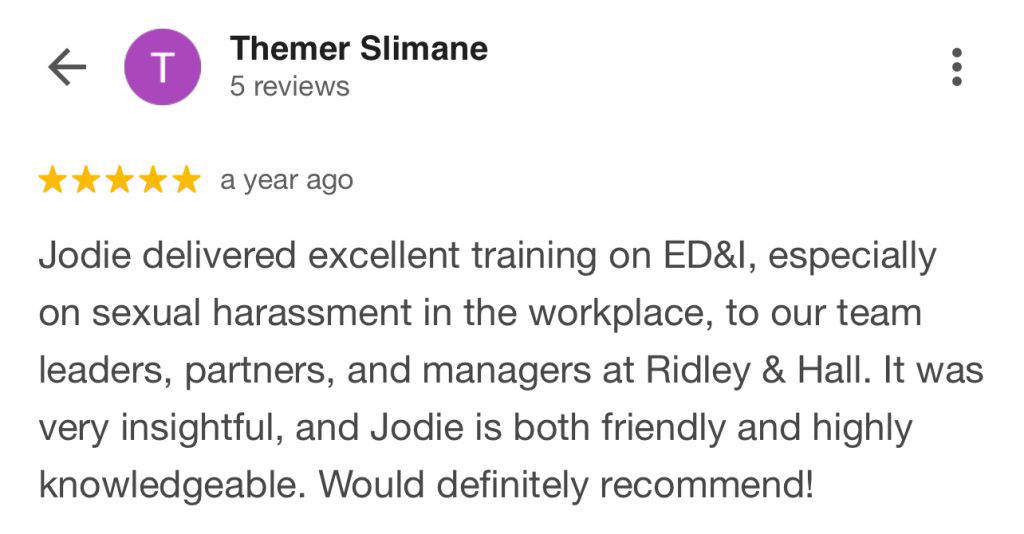
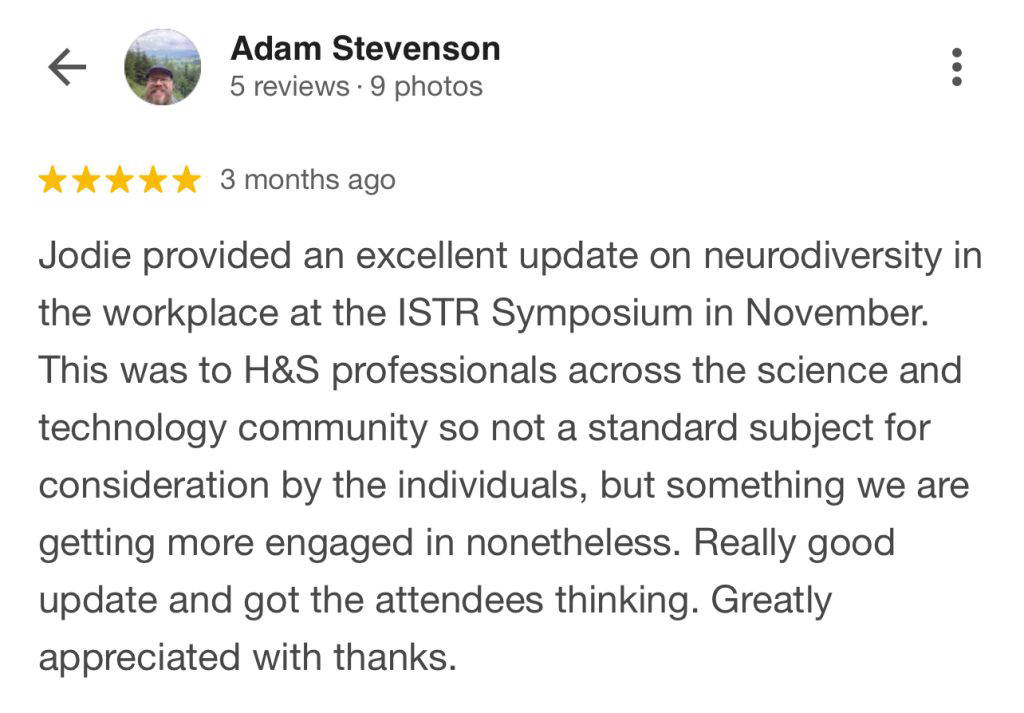
From inspiring keynote talks and dynamic panel discussions to interactive workshops and training sessions, Jodie equips leaders, HR professionals and teams with the tools to build truly inclusive and psychologically safe workplaces. Her sessions cover topics including neurodiversity at work, reasonable adjustments, inclusive leadership, psychological safety, communication and managing performance with compassion.
Why Mental Health Matters
Mental health and neuroinclusion are not just “nice to have” – they are essential to building resilient, high-performing organisations. Jodie helps businesses move from awareness to action, embedding inclusive practices that are both legally sound and commercially effective.

Take a meaningful step towards building a more inclusive, supportive and a workplace where everyone can thrive by booking Jodie Hill to speak at your workplace or next event.